How A Certified US Naturopath Helped Me Finally Take Back Control Of My Diabetes — After 3 Years Of Suffering In Silence With High Sugar, Weakness And Fear.
I was doing everything my doctor said. Tablets every morning. No sugar. No soft drinks. And still, my numbers refused to come down and my body kept punishing me. Then one honest conversation, and one simple 100% herbal pack, changed everything.
If you're reading this, chances are you already know exactly what it feels like because two years ago, I was living it every single day.
You wake up in the morning and something already feels off. You slept eight hours, but you're still exhausted. Your mouth is dry. You're thirsty before you've even had breakfast. You reach for your meter, prick your finger, wait for the number and it's high again.
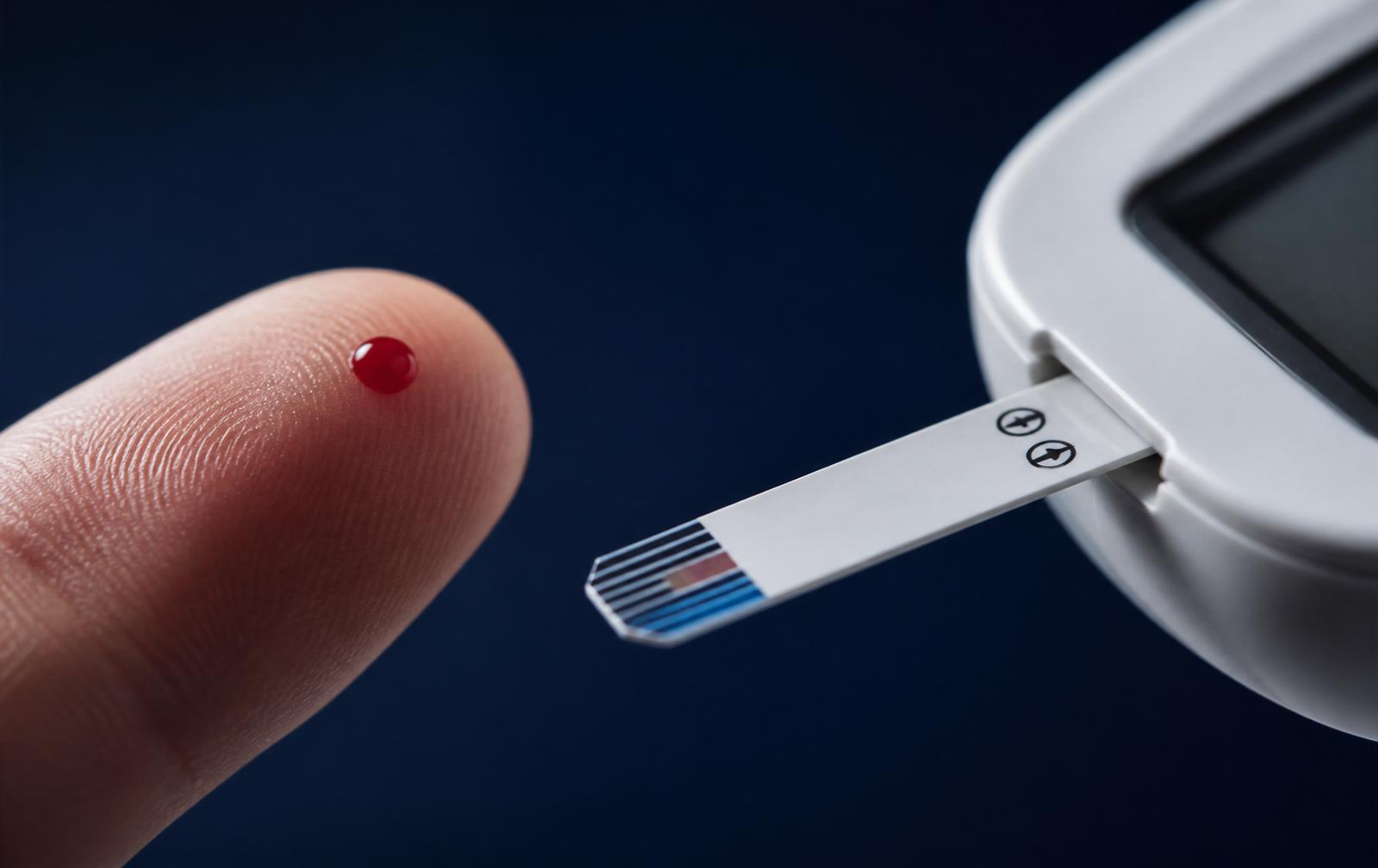
You didn't eat sweets yesterday. You avoided soft drinks. You even skipped the puff-puff at your sister's place. And still the meter tells you the same story it's been telling you for months.
By 2pm, a wave of weakness passes through you. Your legs feel heavy. Your head feels light. You sit down for a moment and hope nobody notices. By 4pm, the cravings arrive. Loud ones. Your body begging for something sweet, something starchy, anything to make this feeling stop.
If you skip a meal or eat too late, the shakiness starts. Your hands tremble. You get irritable with people who don't deserve it. You feel like a stranger in your own body.
And you carry all of this quietly. You don't want to worry your children. You don't want your husband to look at you with that particular kind of pity. You don't want your friends whispering about your health at the next owambe. So you smile. You show up. You keep it to yourself.
At night, when the house was quiet, that was when the fear used to come. What if this gets worse? What if the medications stop working? What if I lose my sight, my kidneys, my feet like I've watched happen to others?
First let me tell you who I am
Hi, my name is Enoka. I'm a 47-year-old mother of three living in Lagos.
The first thing you should know about me is that I am not a doctor. I'm not a nurse. I'm not a nutritionist. I'm just an ordinary Nigerian woman who saw hell for three long years and, by God's grace, came out the other side with something worth sharing.
This story is the reason I write for Healthmake now. Not because I have credentials but because I lived it, and I know how many other Nigerian women (and men) are quietly living it right now.
How it started for me
It began about a year after my third child was born. I noticed I was always thirsty. I was always tired. I would fall asleep on the sofa at 8pm and still wake up feeling like I'd been beaten. I chalked it up to motherhood. I told myself, "You just had a baby, Enoka. Rest."
Then one Sunday, after church, I nearly fainted in the car park. My cousin who happens to be a nurse took one look at my face and said "Sister, you need to check your sugar." I did. It was 268. I didn't even know what that number meant. She did. She started crying.
For the next two years, I did everything I was told to do. I cut sugar. I stopped taking soft drinks. I threw away every biscuit in the house. I started my medication. I walked around the estate every morning. I bought expensive imported "diabetic food" from that shop in Lekki that everyone talks about.
And still. My readings would not stabilise.
Some weeks I would be doing so well and then, out of nowhere, my morning number would jump for no reason I could explain. My husband stopped asking how the reading was in the mornings, because he could see the disappointment in my face before I even opened my mouth. That silence between us hurt more than the number itself.
I tried everything the internet suggested. Bitter leaf water. Bitter kola. Cinnamon tea. Apple cider vinegar. Some strange herbal mixture a woman was selling on Instagram for ₦25,000 that made my stomach burn for three days. Fasting. Skipping breakfast. Eating only vegetables. None of it made a lasting difference.
I was doing everything. And getting nowhere. I was tired of being tired.
Then I met Dr Sam
I met him almost by accident. My aunty in Enugu had been talking about a US-based naturopath who had helped several Nigerians she knew get a better handle on their own blood sugar. I was skeptical I had heard those kinds of stories before. But she wouldn't stop insisting, so eventually, to keep peace in the family, I booked an online consultation.
I honestly expected the same thing everyone else had told me. "Cut sugar. Exercise. Take your medicine." I braced myself. I brought my meter, my notebook and my disappointment.
Instead, Dr Sam sat with me on a video call for over an hour. He didn't rush. He didn't sell me any herbs. He asked me questions no doctor had ever asked me. What time do you sleep? How do you feel when you wake up? In what order do you eat your food? What is happening in your life that is stressing you? When you eat rice, what do you eat it with and in what order?
Then he said something I will never forget. He said:
For the next hour he explained things about blood sugar that I had never heard from any doctor, any pharmacist, or any WhatsApp broadcast group. Simple things. Practical things. Things that had been happening inside my body every single day quietly sabotaging me while I blamed myself for having "no discipline".
I left that consultation with a small handwritten list. Six changes. Nothing dramatic. Nothing expensive. Nothing that required me to abandon my medication or my doctor.
I was skeptical. It felt too simple. But I had tried complicated. Complicated hadn't worked. So I committed to trying simple for 21 days.
Day 6 something shifted
For the first five days, nothing dramatic happened. My readings were the usual rollercoaster. I almost gave up on day four. But something told me to keep going.
On the morning of day six, I pricked my finger like every other day, sat down at the kitchen table, and waited for the number. When it appeared, I stared at it for a long moment. I didn't believe it. I tested again. Same reading. Then I did something I hadn't done in years I sat down and cried. Not from fear this time. From relief.
Over the next few weeks, my energy started coming back. The 4pm crashes softened. The shakiness at night eased. My readings still moved around I want to be honest with you, this is not magic but they became something I could understand. And understanding, after years of confusion, is the most healing thing there is.
One evening my husband looked up from his phone and said, "You've been laughing more this week. Are you okay?" I couldn't even answer him without tearing up.
I went back to Dr Sam three months later and told him everything. I told him about my husband. I told him about my aunty who I had passed the tips to, who had also started seeing changes. I told him about my neighbour who I forced to try just two of the habits, who came back one week later banging on my gate to ask what else was on the list.
I told him: "Dr Sam, you have to write this down. There are too many of us suffering silently in Nigeria. If this could reach the woman in Aba, the man in Kaduna, the aunty in Onitsha, the uncle in Warri imagine."
He smiled. And a few months later, he sent me a copy of what he had written.
4 things Dr Sam taught me that no one else had
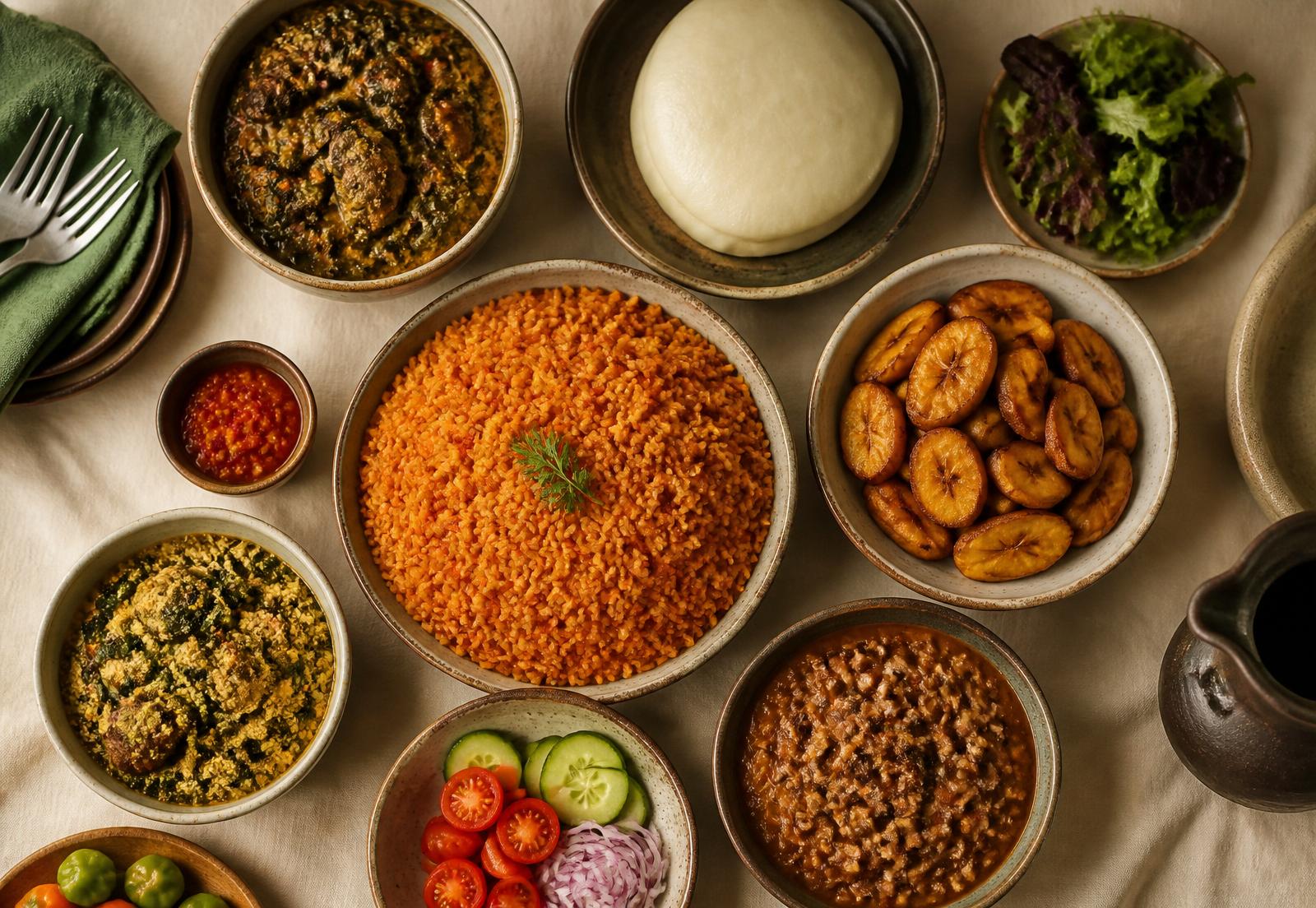
Many of the foods on the average Nigerian plate white rice, pounded yam, eba, garri, amala, semovita, fufu, ripe plantain, boiled potatoes, white bread are broken down by the body into glucose very quickly. I was eating "sugar-free" meals and still sending my reading climbing within thirty minutes. This one truth alone changed how I looked at every plate in front of me.
Stress raises a hormone called cortisol, and cortisol tells the liver to release stored sugar into the bloodstream. That's why so many of us find our morning fasting reading is high even after going to bed on an empty stomach. Poor sleep, worry, financial pressure, a difficult conversation the day before all of it shows up on the meter the next morning.
Eating vegetables and protein before your carbohydrates even by just a few minutes can noticeably reduce how sharply your blood sugar rises after the same meal. Same plate. Same food. Different order. Completely different result. I still can't believe nobody ever told me this before.
When your reading spikes quickly, the body over-corrects and pulls it down too far. That crash is what creates the afternoon shakiness and the urgent craving for bread, biscuits, or a cold drink. It isn't weakness. It's biology and once you understand the cycle, you can quietly interrupt it.
Introducing the natural pack Dr Sam put me on
Understanding why my blood sugar was climbing was one thing. But Dr Sam did not stop at explanations. He also put me on a simple, 100% herbal pack that he had been quietly recommending to the Nigerians he worked with for years. Two capsule bottles. That was it. Taken with the same everyday Nigerian meals I was already eating.
Within a few weeks, my morning readings started to look different. Calmer. More predictable. My energy came back. My afternoon crashes stopped. The pack was doing quietly, day after day, what months of stress and searching could not.
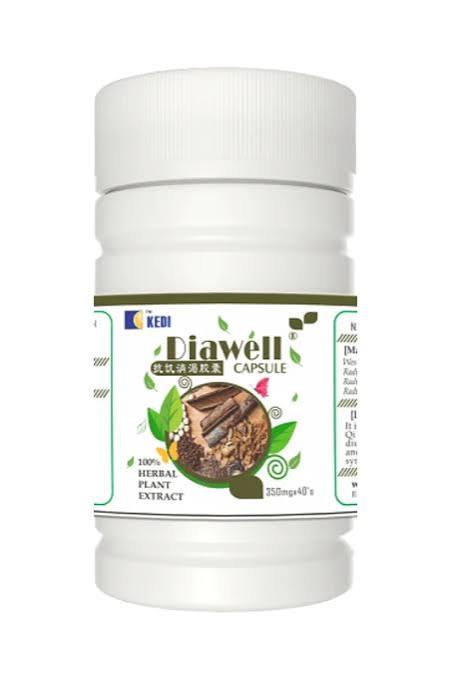
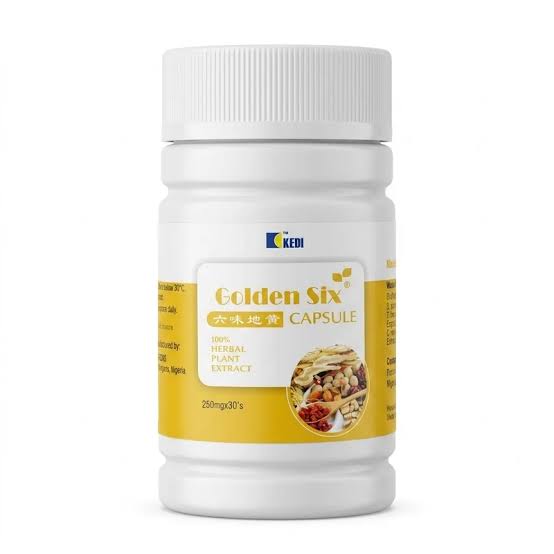
What the natural pack is designed to do:
- Support balanced blood sugar response after meals — so your readings stop swinging wildly through the day.
- Act as an anti-diabetic aid (often used for Type 2 Diabetes) and has been studied for its ability to improve lipid profiles and protect liver function. [1, 2, 3]
- Help your body handle carbs from Nigerian staples like rice, yam, eba and plantain more calmly, when combined with the meal-order tips.
- Steady your energy through the afternoon so the 4pm crash and cravings quietly fade.
- Support kidney and general vitality through the six traditional herbs in Golden Six — the same organs that quietly do so much of the work.
- Work alongside the medical care you're already receiving — not replace it. Continue your doctor's instructions and simply add the pack.
- Simple dosage: 2 capsules of Diawell + 2 capsules of Golden Six, twice daily with water. That's all.
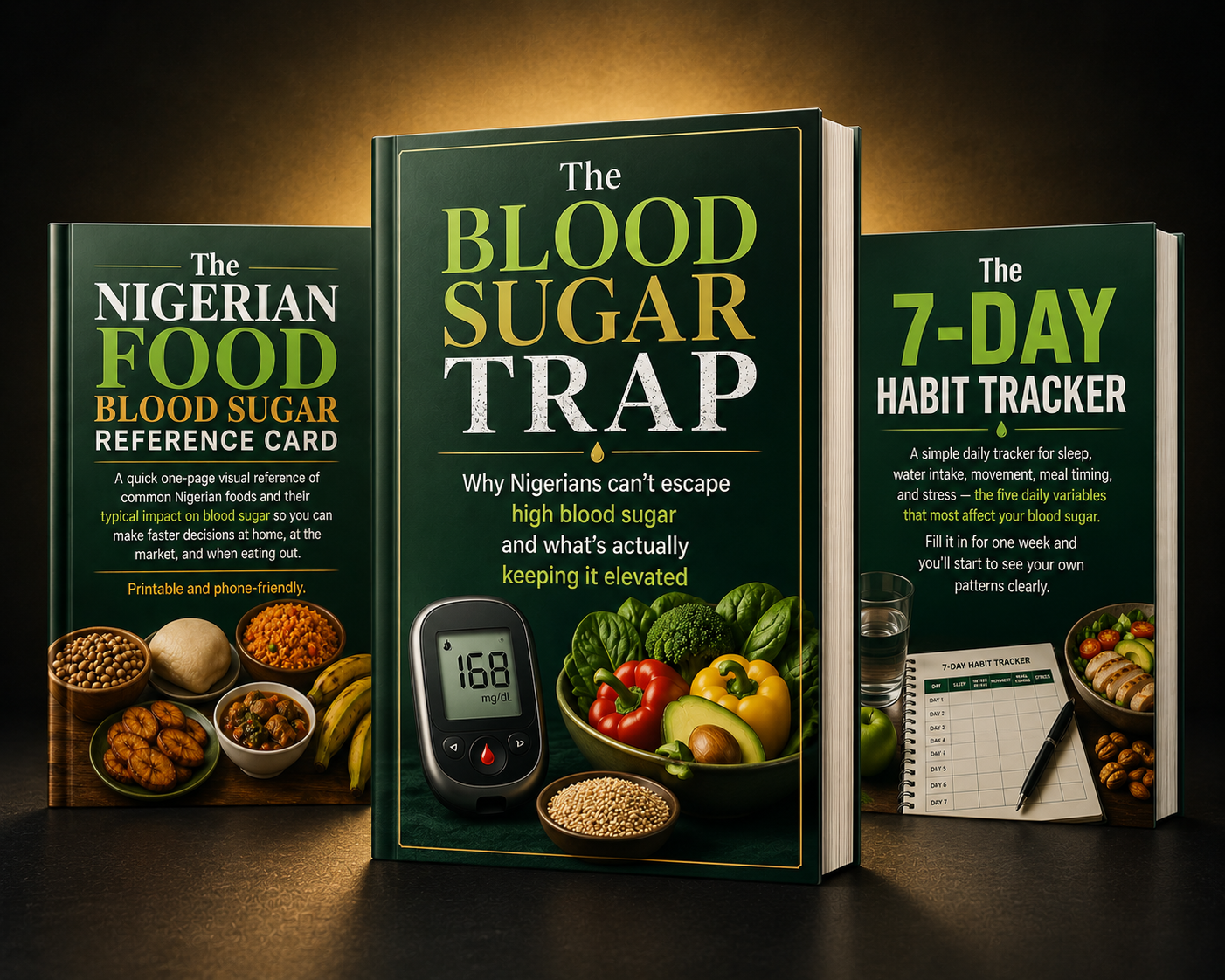
- The Blood Sugar Trap — the complete written guide
- The Nigerian Food Blood Sugar Reference Card — 40+ foods rated
- The 7-Day Habit Tracker — printable daily tracker
All three ebooks are delivered to your email the moment your payment is confirmed — so you can start reading while your pack is on its way.
You don't need to buy imported ingredients, join a strange programme, or abandon the medical care you're already receiving. Just take the pack as directed, apply what's in the ebooks, and let your body do the quiet work.
Real Nigerians. Real Results.
Everyday Nigerians who used the natural pack alongside their meals and finally felt back in control.
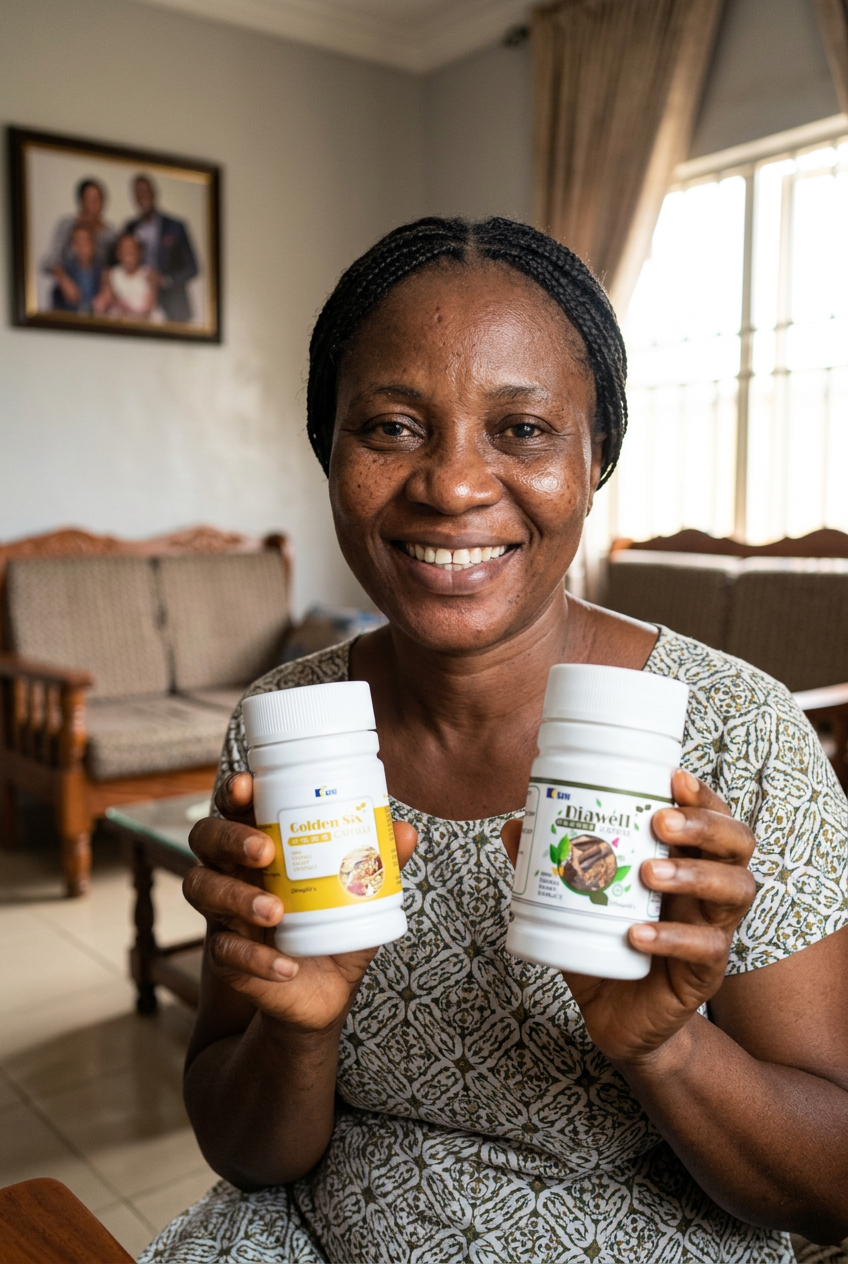
I have been on medicine for years and my sugar was still refusing to calm down. I started this pack and by the third week my morning readings dropped from 210 to around 140. My doctor was surprised. I now sleep better and my energy is back.
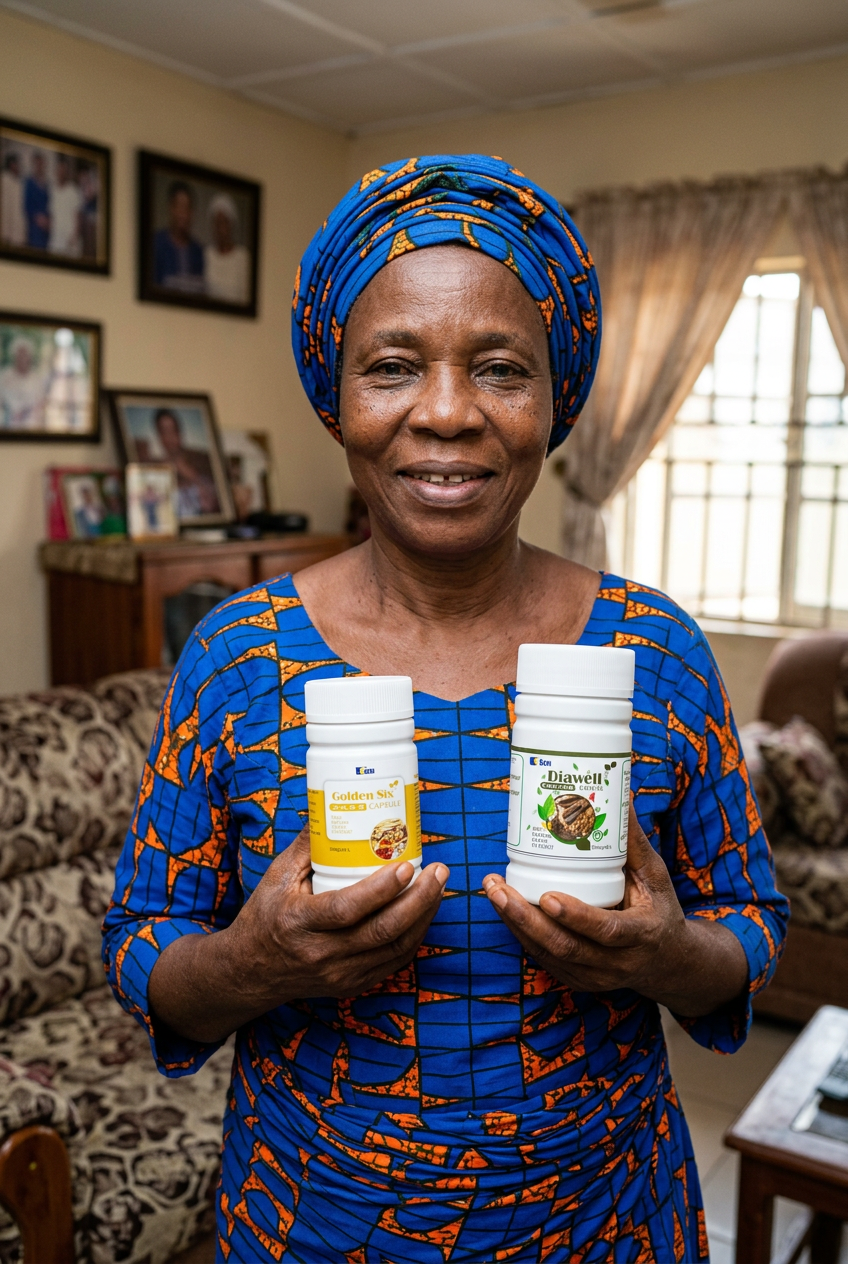
I was tired of trying one thing after another. Two capsules morning, two at night, and I follow the ebook. In one month my readings are steadier than they have been in over two years. And the pack arrived within 4 days as promised.
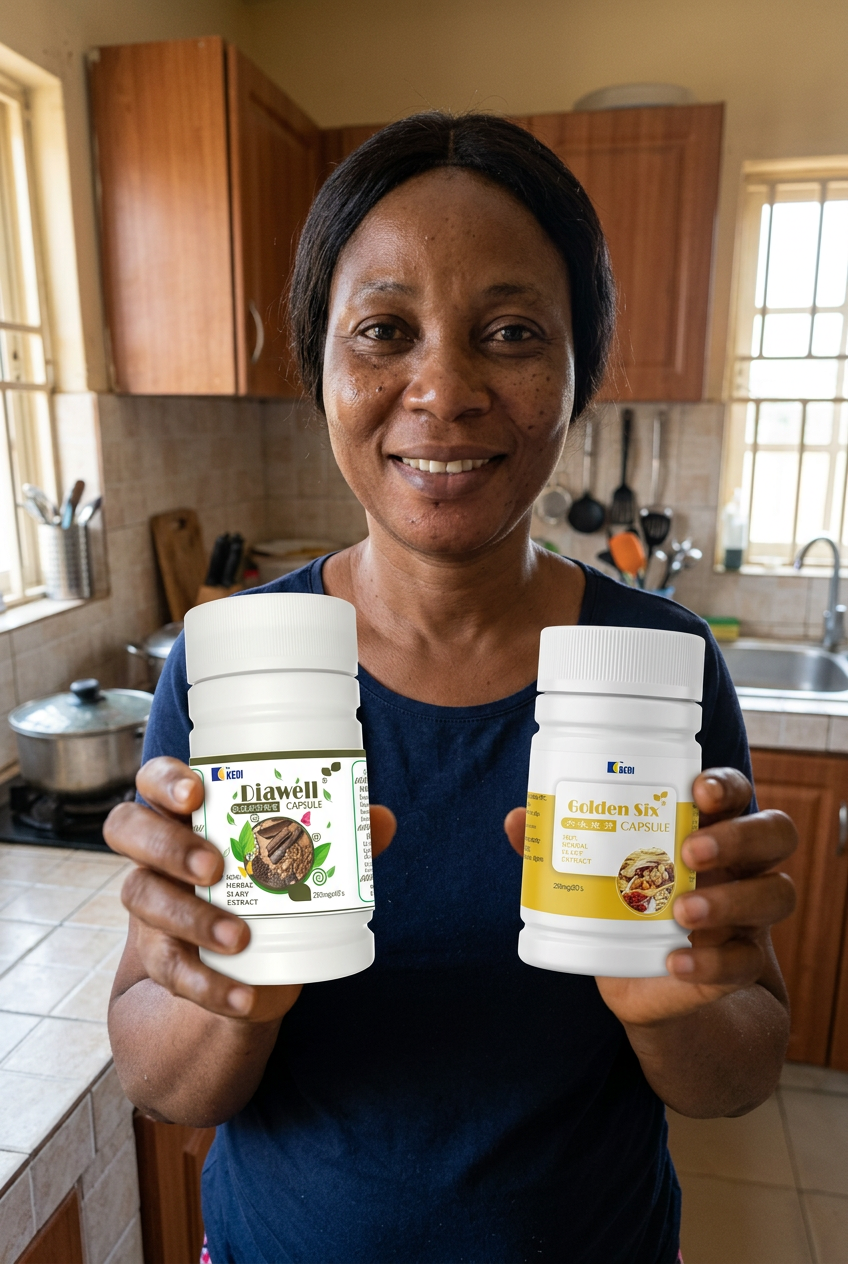
My children were worried about me every day. Since I started using this pack with the food guide, my sugar is stable, my afternoon dizziness is gone, and I can walk around the compound again without getting tired. I thank God for this.
Questions you might be asking right now
Before I got Dr Sam's guide, I had the same worries. Here are honest answers to the questions that almost stopped me.
"I've tried everything. Medications, herbs, diets, YouTube videos. Why would this be any different?"
That is the most honest question you can ask. If you have been living with this for years, taken medications, tried herbal remedies, changed your diet, watched YouTube videos, and followed WhatsApp advice and none of it made a lasting difference it is completely normal to feel cautious.
The difference is not that this pack has a secret ingredient. The difference is that it finally explains, in plain language, what is actually driving your blood sugar in the Nigerian context not just what to avoid, but how to eat, move, sleep, and manage stress in ways that fit your real life.
"I've had diabetes for too long. Is it too late for me?"
It is never too late to understand your body better. This guide is not promising to reverse years of history. What it does promise is this: when you understand how everyday choices affect your blood sugar, you can start making small, informed decisions that help you feel better, have more energy, and work more effectively with your doctor.
Many of the people who have found this pack most helpful are the ones who thought the same thing that their age or years of struggling meant nothing could change. They were surprised by what a few simple shifts could do.
"Healthy food is too expensive. I can't afford special ingredients."
This guide is built around the foods you already buy. There is no expensive superfood list, no imported supplements, and no strange ingredients from abroad. The focus is on how to arrange, time, and pair the foods you already know rice, beans, vegetables, proteins, soups so they work better for your blood sugar.
In fact, many people find they spend less once they stop guessing and start using simple principles that actually work.
"I can't stop eating Nigerian foods like rice, garri, amala, or fufu."
You do not have to stop eating them. That is the point. This guide shows you how to enjoy Nigerian foods in a way that is smarter for your blood sugar not by removing your culture from your plate, but by understanding portions, combinations, and timing.
You will learn why eating your vegetables and protein first can soften the spike from pounded yam. You will learn why the size of your evening eba matters for your morning reading. You will keep the foods you love just with better understanding.
"I've watched so many videos already, but nothing seems clear."
That is exactly why this pack was put together. Most online advice is scattered, generic, or based on foreign foods and lifestyles that do not match yours. This guide is one coherent resource, written specifically for Nigerians, with real Nigerian foods, routines, and challenges in mind.
You do not need to keep searching. You just need one clear guide that answers the right questions in the right order.
"I've spent enough money on medicines and herbs. I don't want another disappointment."
I understand. That is why the whole pack is a one-time payment of ₦60,000 — less than two naturopath consultation and it comes with a 16-day money-back guarantee. If you honestly feel it did not give you real value, email darasimiwale19@gmail.com and you will be refunded in full.
I would rather you feel safe trying it than feel pressured. The risk is on Dr Sam, not on you.
"I'm too busy to cook special meals or follow a complicated plan."
This is not a complicated plan. There are no special meal prep days, no calorie counting, and no rigid schedules. The guide is built around small, realistic changes that fit into a busy Nigerian life a different order of food on your plate, a short walk after lunch, drinking water first thing in the morning, going to bed a little earlier.
If you can make one or two small shifts this week, you are already on the way. The whole approach is designed to be sustainable, not overwhelming.
"Will this actually work for someone like me?"
That is the real question, isn't it? Not whether it works in theory but whether it works for you. For someone with your history, your responsibilities, your age, your budget, your schedule.
This guide was written specifically for people who feel that way. It is simple, practical, designed around everyday Nigerian foods and routines, and intended to help you make informed choices alongside the medical care you are already receiving.
Here's what the Healthmake Natural Pack normally costs.
Diawell and Golden Six are not cheap capsules to produce. They are 100% herbal formulations, carefully sourced, packaged in medical-grade bottles, and quietly used by thousands of Nigerians who need to keep their blood sugar in check.
Bought separately in the shops, Diawell (350mg × 40 capsules) goes for ₦45,000 and Golden Six (250mg × 30 capsules) goes for ₦35,000. That's already ₦80,000 for the two bottles alone — before we even talk about Dr Sam's three ebooks.
A single one-hour naturopath consultation in Lagos costs between ₦25,000 and ₦50,000, and most people need three or four sessions to get the full picture — that's ₦100,000+ before you buy a single bottle. I'm not going to add that on top. I'm not even going to charge you the ₦75,000this pack will sell for after the launch period ends.
WAIT! I have a free gift for you…
If you're among the first 100 people paying today, you'll get these two bonuses alongside your guide completely free. (Today only.)
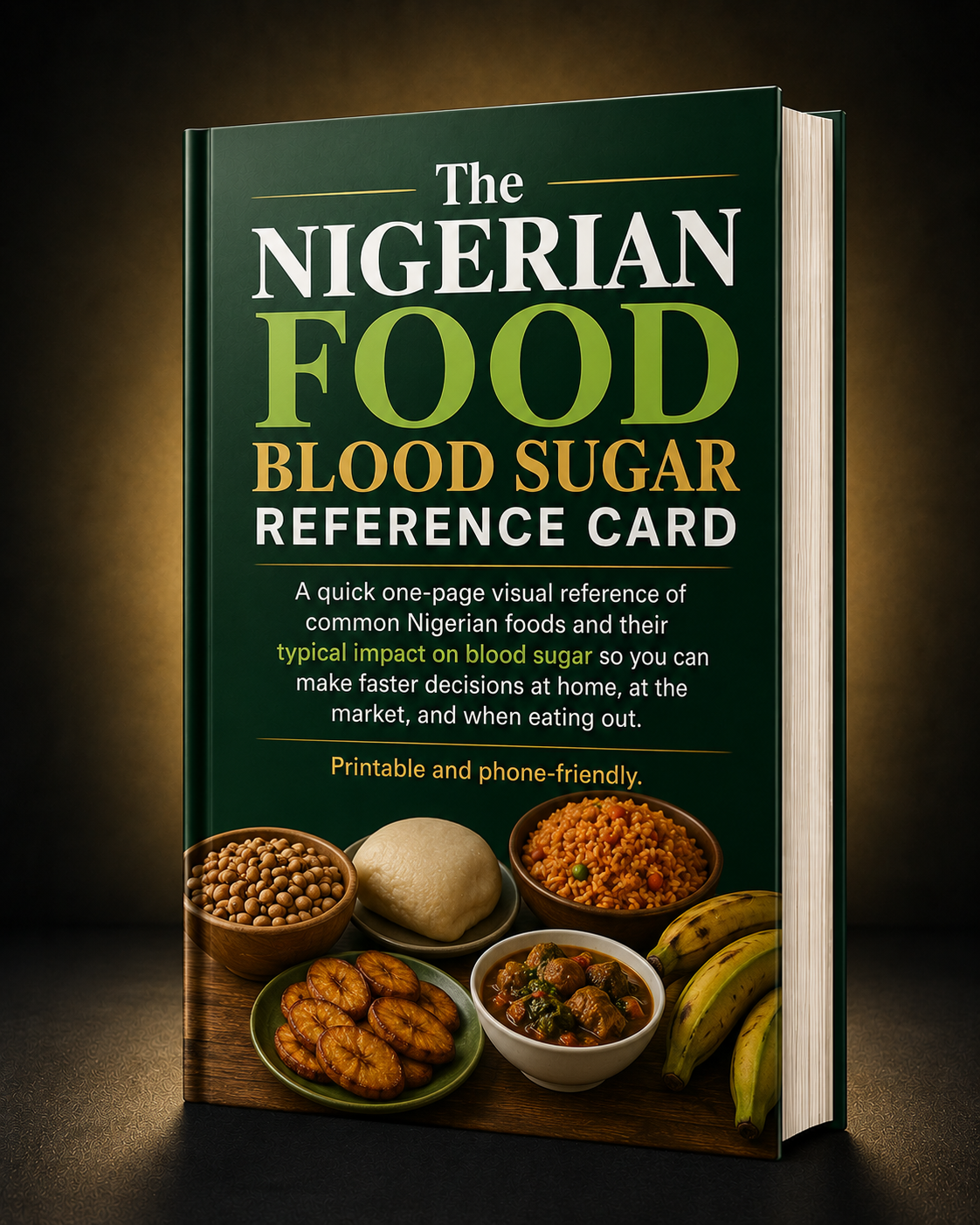
The Nigerian Food Blood Sugar Reference Card
A beautifully designed one-page visual reference of common Nigerian foods and their typical impact on blood sugar so you can make faster, calmer decisions at home, at the market, and when eating out. This is the card I keep on my fridge till today. Printable and phone-friendly.
- Over 40 everyday Nigerian foods from jollof rice and eba to plantain, beans, and soups.
- Simple traffic-light colour coding green, amber, and red indicators for quick decisions.
- Portion and pairing notes learn what to eat with what to soften the spike.
- Market and restaurant ready keep it on your phone or print it for the kitchen wall.
- One-page, no-fluff design no long lists. Just the foods you actually eat, clearly explained.
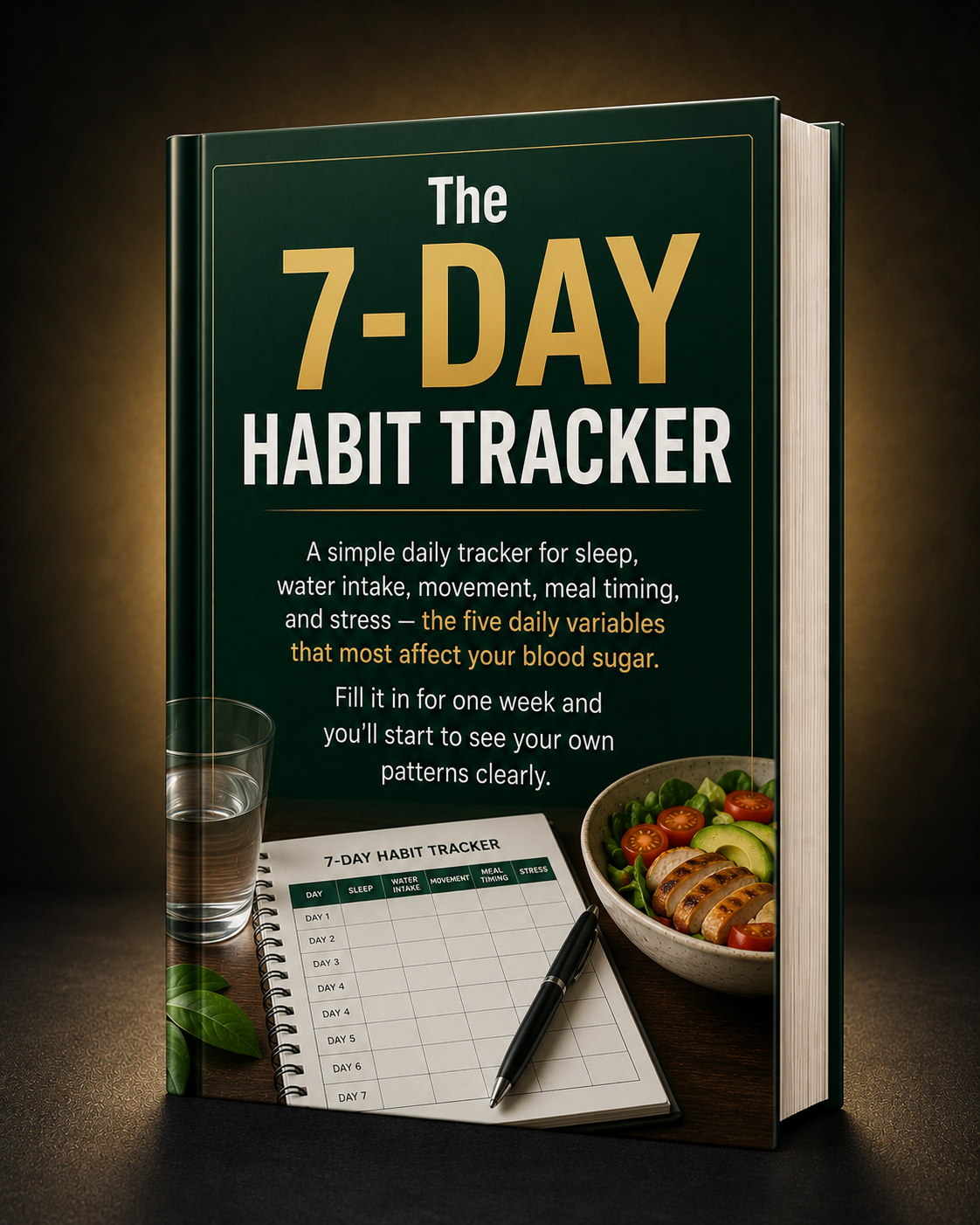
The 7-Day Habit Tracker
A simple daily tracker for sleep, water, movement, meal timing and stress the five daily variables that most affect your blood sugar. Here's what you'll track inside:
- Wake time & sleep quality so you can see how rest affects your morning reading.
- Water intake track how hydration influences your energy and cravings.
- Movement & walking even a 10-minute walk after a meal changes the curve.
- Meal order & timing record what you ate first, and how you felt afterwards.
- Stress level note worry, arguments, or pressure, then compare it to your numbers.
- Space for daily notes capture the small observations your meter cannot.
Fill it in for one week and you'll begin to see your own patterns clearly, the same way I did in that first week. Small steps. Real transformation.
A quick, honest note on timing
The ₦60,000 launch price is genuinely limited to the first 100 buyers. There's no hidden countdown timer on this page pretending to be urgent but the price will actually change when we hit that number, because the intention behind the launch price is to reward the people who take a chance on the pack early.
After the first 100 packs, the price on this page will be updated to ₦75,000 and this section will be revised. If you're reading this and the price still says ₦60,000, the launch offer is still active for you today.
Still feeling unsure? I completely understand.
Which is why Dr Sam is making you a bold, risk-free promise: use the pack as directed (2 capsules twice daily) alongside the ebooks, apply what makes sense for your situation, and if within 16 days you honestly feel you haven't received real value reach out at darasimiwale19@gmail.com and your ₦60,000 will be refunded in full. No questions asked. No forms to fill. He'd rather refund your money than have anyone feel misled. That is how confident he is that this pack will give you real, practical value.
You have two choices right now.
Option 1: Take action. Order the Healthmake Diabetes Natural Pack. Take it as directed. Read the free ebooks. Apply what fits your life. Start understanding what is really going on inside your body and take one small step this week toward feeling better. The way I did on Day 6.
Option 2: Close this page. Keep running from one place to another, trying one thing after another that hasn't quite worked. Wait until the next scary reading forces you to look for answers all over again. Maybe God wanted you to see this today. Maybe not. Who knows?
The clock is ticking. Only one of these choices moves you forward.